Cuba
and the Kennedy Assassination
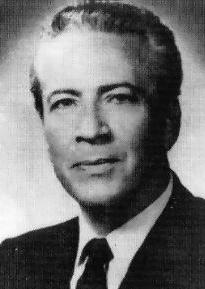
by John Martino
[Human
Events. Jan, 1964]
During the three years that I was incarcerated in Cuban
prisons, former
intimates told me of the Red dictator's irrational hatred of
President
Kennedy. One Red publication, I remember, displayed a fake
photograph
showing the President and the First Lady careening drunk
through the
streets of Mexico City during their official visit in 1962.
Another-the
magazine Mella, featured a cartoon in which John F. Kennedy
was
depicted as a dope pusher injecting narcotics into the arm
of a child.
This almost insane hatred was not due to any belief that
President
Kennedy was strongly anti-communist. It was partly jealously
[sic] on
Castro's part of the way that JFK's personality had captured
the
imagination of the Cuban people. For almost six month's, it
has been
assumed in Cuban circles in Miami and in Havana that the
Kennedy
Administration planned to eliminate Fidel Castro, his
brother Raul; Che
Guevara and various others through a putsch.
Cuban exiles here understand that plans for this operation
were cleared
with a Soviet representative in Europe shortly after the
missile crisis
of last October (1962). The old-line communists inside the
Castro
regime were to take part in the operation together with
Castro henchmen
that were paid to switch sides. The plan involved a more or
less token
invasion from Central America to be synced with the coup. A
left-wing
coalition government was to be set up, including leaders of
the Cuban
Communist party. The most talked about candidate to head
this
"democratic" regime was Huber Matos, a former Castro
commander, who is
at the present the most privileged prisoner on the Isle of
Pines. Matos
enjoys a private room and a television set. He is allowed to
strut
around in his uniform as one of Castro's commandants while
decent and
patriotic Cubans in the same prison suffer unspeakable
tortures.
The plan allegedly involved complete withdrawal of Soviet
troops,
release of all political prisoners, U.S. occupation of Cuba
and a new
government of the Tito or Ben Bella type. It was to be
staged for
February 1964. According to reports from usually reliable
exile
sources, Khrushchev had agreed to the plan because of the
importance to
the Soviet Union of re-electing the Democratic
Administration. The plan
provided that Castro and his fellow experts in murder and
genocide were
to be given safe conduct out of Cuba. From the Soviet
standpoint, all
that was involved was a slight tactical retreat in Cuba to
be offset by
advances on other Latin American fronts, such as Brazil and
Chile. From
Castro's standpoint, however, it meant the end of his career
as a world
figure and refused to go along with it.
Assassination of President Kennedy was a bold way of
checkmating the
plan. At a reception in the Brazilian Embassy in Havana in
early
September, Castro told newsmen that CIA agents had been sent
to the
island to kill him and Raul. If Kennedy was behind this, he
added, the
American President should realize that he was not the only
politician
that could engineer the assassinations of chiefs of state.
This story
was published in the Miami News on November 24. Meanwhile
Emilio Nunez
Portuondo, the distinguished former Cuban ambassador to the
United
Nations and one-time president of its Security Council,
informed his
friend and associate in Mexico, Dr. Jose Antonio Cabarga, of
Castro's
threat. El Universal, one of Mexico's leading newspapers,
published the
story as a front page exclusive. Immediately thereafter, the
Mexican
police arrested Cargaga for delivering the report to El
Universal and
beat him up so badly that he is now hospitalized.
This is typical of the conduct of the Mexican police
President Adolfo
Lopez Mateos, whose pro-communist background and
associations are
myriad. For example, when Tito visited Mexico a few months
ago,
newspaper publishers were ordered to print only laudatory
articles on
the Yugoslav dictator. To prove to the world that Mexico has
a free
press, however, two or three critical articles were approved
and
ordered published. Immediately before the Tito visit, a few
anti-communists students attempted to destroy posters
praising the
Balkan butcher. They were caught by the police, held
incommunicado for
a few days and subjected to tortures which leave no
permanent scars.
For example, one was hanged by the feet and repeatedly
dropped on his
head, but so lightly that his skull was not broken.
The Cubans in the South Florida area have had dealings with
Oswald in
the past and they are not willing to join the press in
dismissing him
as a fanatic, a psychopath or a pathetic, maladjusted youth.
When he
was in Miami, Oswald attempted to join an organization of
Americans
engaged in training Cubans in guerrilla warfare, headed by
Jerry
Patrick [Hemming]. As a former Marine, Oswald would have
been useful,
but he failed to pass a security check and was turned down.
Oswald made
similar approaches to the Cuban Revolutionary Student
Directorate (DRE)
and to JURE, another organization of Cuban freedom fighters,
but was
rejected.
Many Americans will never have used a psychologically
unstable person
of this sort and that they would have shunned Oswald because
of his
record of long and notorious Red associations. This is true
as far as
Soviet-oriented Reds are concerned. However, the Kremlin
Communists
were certainly innocent of complicity in the assassination
for the
simple reason that Khrushchev had no reason to desire
Kennedy's death.
Fidel Castro probably had very few potential assassins in
this country
who were loyal to him rather than to Moscow. Those Reds who
follow
Castro tend t be more zealous and destructive elements in
the movement,
people consumed by hatred, not only of Western civilization,
but of
mankind in general.
If Castro needed an assassin, he would have had to search
among the
Maoists, the Stalinists and the neo-Trotskyites-in another
words, among
people as disturbed, warped, hate-saturated and wicked as
Oswald. The
fact that the crime was committed in Dallas, a center of
American
conservative and nationalist movements, was probably not
accidental.
Had Oswald managed to escape to Cuba, the liberal press and
the
Establishment could have placed the entire blame for the
murder of the
President, not on America's Communist enemies, but on those
who love
this country and wish to preserve its institutions and its
heritage.
End of Page
Copyright
1998-2014 Cuban Information Archives. All Rights
Reserved.